Every team needs a steady hand, someone who keeps things consistent, fosters trust, and provides a sense of calm when challenges arise. In the DISC (Dominance, Influence, Steadiness and Conscientiousness) model, that role often belongs to those with a high Steadiness (S) score. They are the people who bring reliability, loyalty, and patience to the workplace. High “S” individuals are easy to recognize: they value stability, prefer predictable routines, and excel at supporting others.
In leadership and collaboration, these traits are essential. While others may push for speed or chase new ideas, “S”s make sure the foundation stays solid. They keep teams grounded, strengthen relationships, and create environments where people feel safe to contribute. At the same time, their preference for comfort and consistency can become a challenge. A strong “S” may hesitate to embrace change, avoid difficult conversations, or resist taking risks. The key is to appreciate their steady nature while encouraging flexibility, so their support leads to long-term growth instead of stagnation.
What Does “S” Measure?
The Steadiness factor measures how someone responds to pace and consistency.
- If your highest score is “S,” you are a Predictable Communicator.
- If your lowest score is “S,” you are a Dynamic Communicator.
This factor reflects whether someone prefers a steady, consistent environment or thrives in a more fast-paced, changing one.
Strengths of “S”
High “S” individuals bring dependability and collaboration that make teams stronger. Their strengths often include:
- Loyal: Committed to people and organizations over the long term.
- Dependable: Consistent in follow-through and reliability.
- Supportive: Prioritizes teamwork and the needs of others.
- Patient: Willing to listen, empathize, and give people time.
These qualities make “S”s trusted teammates and stabilizing forces in any group.
Areas to Balance
Without awareness, the “S” style can lean too heavily on comfort and predictability. Common challenges include:
- Resistance to Change: May prefer stability over necessary adjustments.
- Conflict Avoidance: Can struggle to address issues directly.
- Cautiousness: May hesitate to take risks or make bold moves.
- Over-accommodating: Risk of putting others’ needs ahead of their own priorities.
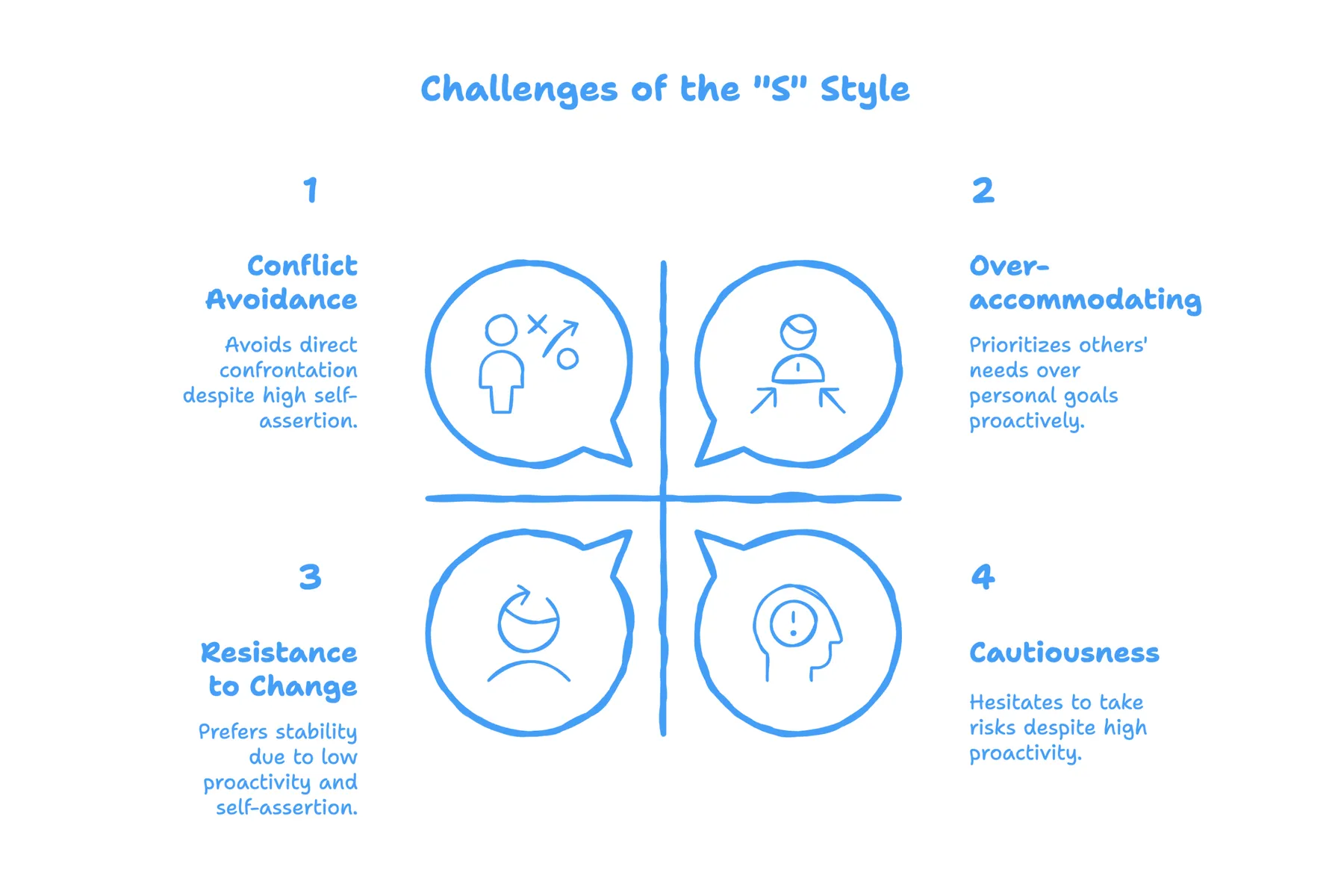
Balancing steadiness with adaptability helps “S”s use their supportive strengths without holding back progress.
Leading and Working With “S”
For leaders who are high in “S”:
- Use your reliability and loyalty to build trust across the team.
- Recognize when comfort is keeping you from making necessary changes.
- Push yourself to address conflict directly when the situation calls for it.
For those working with an “S”:
- Provide reassurance and a consistent environment.
- Allow time for them to process changes and adjust.
- Appreciate their loyalty and commitment, and encourage them to share their perspectives.
Steadiness brings balance to every team. High “S” individuals create stability, loyalty, and trust that allow others to thrive. They are often the glue that holds groups together, making sure collaboration feels safe and dependable. Yet their strength in maintaining consistency can also become a limitation when growth requires change or conflict needs to be addressed.
When “S”s are encouraged to step out of their comfort zone, they complement their natural steadiness with adaptability. Paired with the drive of “D,” the energy of “I,” and the precision of “C,” their loyalty and patience help teams stay grounded as they move forward.
Here’s the Point 🔵 The power of “S” is in its loyalty and support, and its greatest impact comes when steadiness is paired with the courage to embrace change.