Why do some teams thrive while others constantly run into friction? More often than not, the difference comes down to behavior. People communicate, make decisions, and handle challenges in distinct ways. Without a framework, those differences can cause confusion. The DISC model provides clarity. It breaks behavior into four factors — Dominance, Influence, Steadiness, and Conscientiousness — and shows how they combine to shape the way we work.
DISC isn’t about labeling people. It’s about awareness: understanding your own tendencies, recognizing the styles of others, and learning to adapt. With that awareness, business owners and leaders can reduce conflict, teams can collaborate more effectively, and organizations can align strengths for better results.
What Is DISC?
DISC is a behavioral model that explains how people do what they do. It centers on four factors:
- D – Dominance: Responding to problems and challenges.
- I – Influence: Connecting with and persuading others.
- S – Steadiness: Responding to pace and consistency.
- C – Conscientiousness: Responding to rules and procedures.
Most people lean toward one or two factors, but it’s the blend of all four that creates a unique behavioral style.
Why DISC Matters
Teams rarely struggle because of skill gaps. More often, miscommunication and misaligned expectations get in the way. DISC gives people a language to explain differences and adjust accordingly.
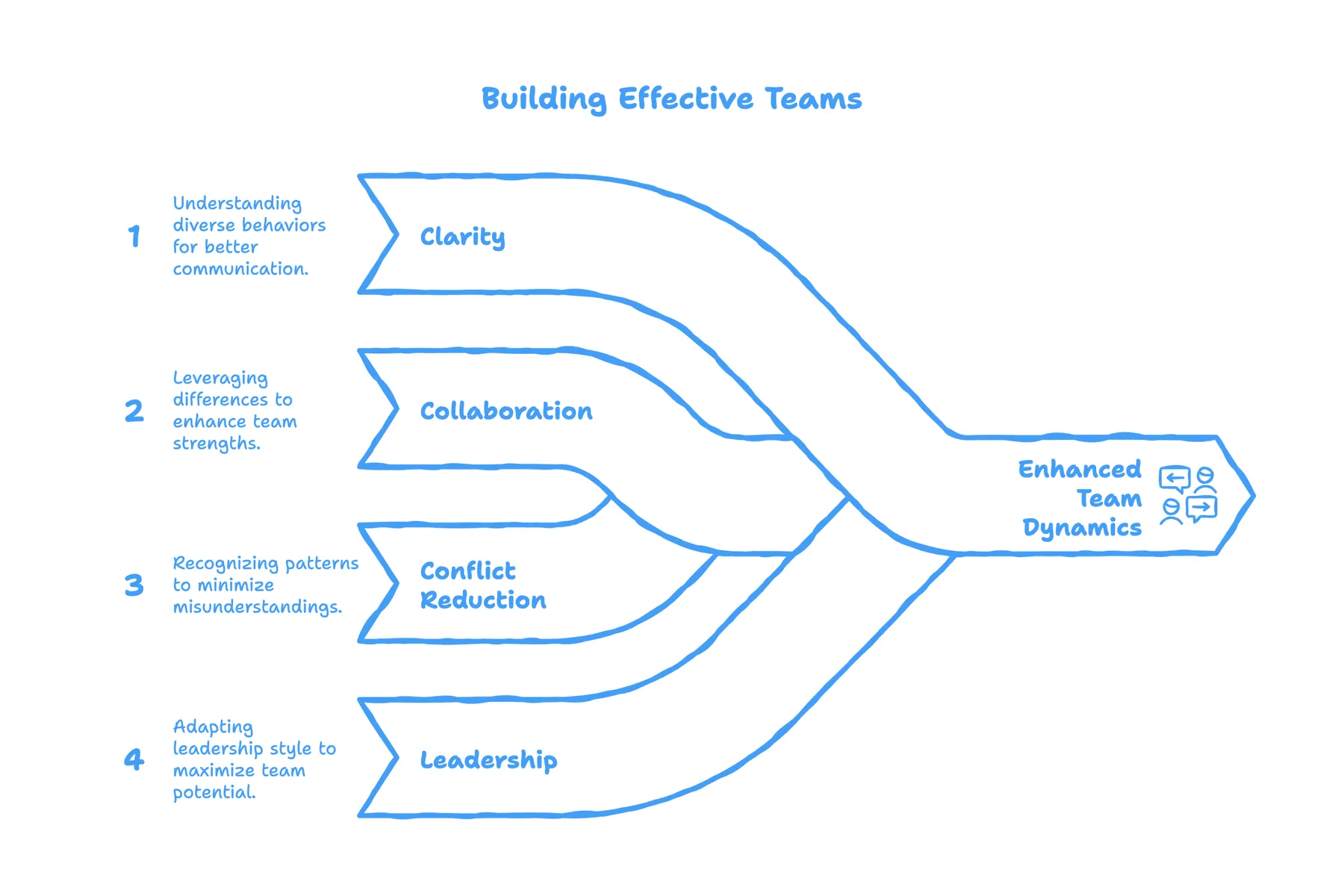
- Clarity: See why people behave the way they do.
- Collaboration: Turn differences into complementary strengths.
- Conflict Reduction: Reduce misunderstandings by recognizing patterns.
- Leadership: Adapt style to bring out the best in others.
Putting It All Together
The power of DISC comes from balance. A team of “D”s might move fast but miss details. Too many “I”s might generate energy, but struggle to finish projects. “S”s bring stability but may resist change, while “C”s ensure accuracy but sometimes lose sight of the big picture.
No one style is better than another; the advantage comes from knowing how they fit together. When teams recognize these dynamics, they can anticipate friction, adapt communication, and make better decisions.
Effective teams aren’t built on copycats. They thrive on differences that complement each other. DISC provides a practical way to see those differences clearly and turn them into an advantage. For leaders, it means knowing your natural tendencies and flexing them when needed. For teams, it means appreciating every style and finding balance across them.
When DISC becomes part of everyday communication, conversations get clearer, conflict turns into collaboration, and execution becomes smoother. A “D” drives momentum, an “I” builds energy, an “S” provides stability, and a “C” ensures accuracy. Each matters on its own, but together, they create the foundation for a stronger, more adaptable team.
Here’s the Point 🔵 DISC isn’t about changing who you are; it’s about recognizing the strengths in every style and bringing them together for lasting results.