Some weeks end and you can’t point to what actually moved.
You were in meetings, you answered everything, you handled the fires, you kept the machine running. And yet the priorities you care about most are still sitting in the same place.
That’s one of the most frustrating experiences in leadership, and it’s more common than people admit. Not because leaders don’t work hard, but because the environment rewards responsiveness. When change is constant and demands keep stacking, staying busy can feel like the same thing as making progress.
It isn’t.
Activity gives you an immediate sense of accomplishment. You clear your inbox, attend the meetings, and respond to what’s in front of you. Progress works differently. It shows up later, in results that are harder to point to in the moment but easier to measure over time.
A big reason leaders get stuck here is that work starts getting measured by volume instead of results. Updates get praised. Meetings get booked. Initiatives multiply. Teams can show they’re doing a lot without being clear about what is supposed to change because of it.
When the pace of change is high, that becomes dangerous. People get tired. Focus breaks down. And eventually, the organization becomes a place where everything is happening and nothing is improving.
The fastest way out is to get strict about outcomes.
Instead of starting the week by listing everything you need to do, start by naming what must be different by the end of the week. Not “make progress on X.” Something you could actually observe: a decision made, a process simplified, a proposal sent, a client issue resolved, a bottleneck removed.
Then ask a tougher question: what work this week directly drives that outcome, and what work only creates the appearance of progress?
That’s where most “busy work” gets exposed. It’s not useless work, it’s just not priority work. It’s the meeting that could have been an email. The check-in that exists because no one defined the outcome. The task you keep doing because it’s familiar, not because it’s moving anything forward.
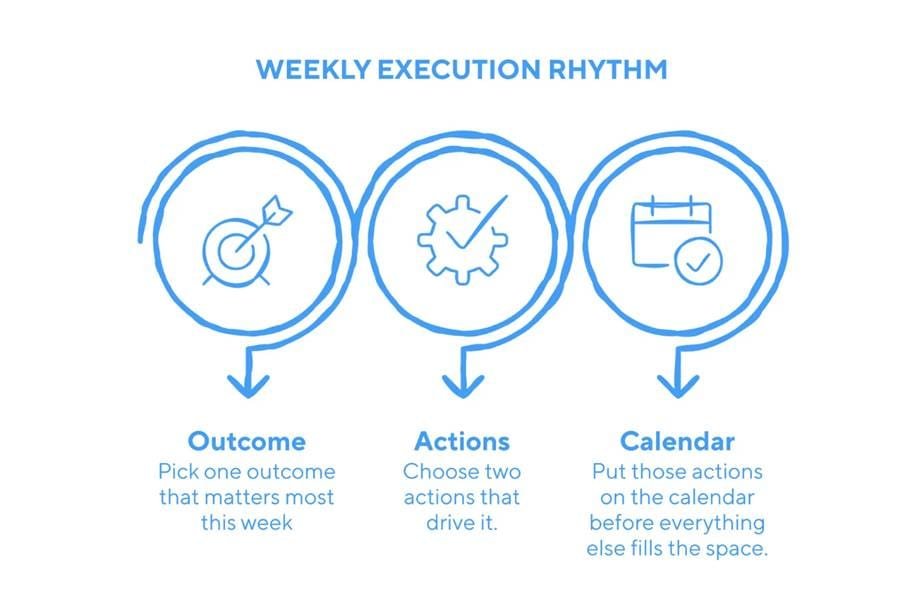
Here’s a simple weekly execution rhythm that helps:
- Pick one outcome that matters most this week.
- Choose two actions that drive it.
- Put those actions on the calendar before everything else fills the space.
Then, midweek, do a quick audit: is your time still protecting those actions, or has the week turned into reaction mode?
This matters because teams can only absorb so much change at once. When leaders ask people to do everything, people either burn out or they start going through the motions. The work doesn’t fail loudly. It just stops producing meaningful results.
Strong execution often looks like doing less. Not less effort, less scatter. Fewer active initiatives, cleaner handoffs, clearer outcomes, and tighter follow-through.
This is where coaching is especially useful. A coach helps leaders sort through what’s actually driving results versus what’s simply consuming time. They help you focus on the work, reduce distractions, and build the discipline to execute even when the environment remains chaotic.
Before the week ends, ask yourself:
What did I spend time on that created motion but didn’t change anything?
Pick one outcome for next week, protect the actions that drive it, and remove one thing that doesn’t.
That’s how you turn busy into effective.
———————
Sources: