When problems arise, some people pause to analyze. Others dive in headfirst. Those in the Dominance (D) category of the DISC (Dominance, Influence, Steadiness and Conscientiousness) model fall firmly in the second camp. They are the drivers of action, the ones who thrive on challenges, make decisions quickly, and push for results. High “D” individuals are often easy to spot: they move fast, speak directly, and prefer to cut through obstacles rather than talk around them.
In leadership, this decisiveness can be a tremendous strength. Organizations need people who are willing to set direction, take risks, and create momentum. But like every style, the power of “D” comes with trade-offs. When drive turns into impatience, or when results overshadow relationships, friction can build. The key for leaders and teams is learning how to channel “D” energy in a way that keeps the team moving forward without leaving others behind.
What Does “D” Measure?
The Dominance factor measures how someone responds to problems and challenges.
- If your highest score is “D,” you are a Direct Communicator.
- If your lowest score is “D,” you are a Reflective Communicator.
This style does not define whether someone can solve problems. Instead, it reflects how they choose to approach them.
Strengths of “D”
High “D” individuals bring urgency and momentum. Their strengths often include:
- Decisive: Quick to make calls and keep projects moving.
- Driven: Focused on outcomes and results.
- Resilient: Willing to take risks and push through challenges.
- Directive: Comfortable setting expectations and holding others accountable.
These qualities are invaluable when a team or business needs speed, clarity, and determination.
Areas to Balance
Without awareness, the “D” style can become overwhelming for others. Common challenges include:
- Impatience: May rush through discussions or dismiss details.
- Overlooking Others: Can prioritize results over relationships.
- Tunnel Vision: Risk of pushing one path forward without considering alternatives.
- Directness: Communication may come across as blunt or demanding.
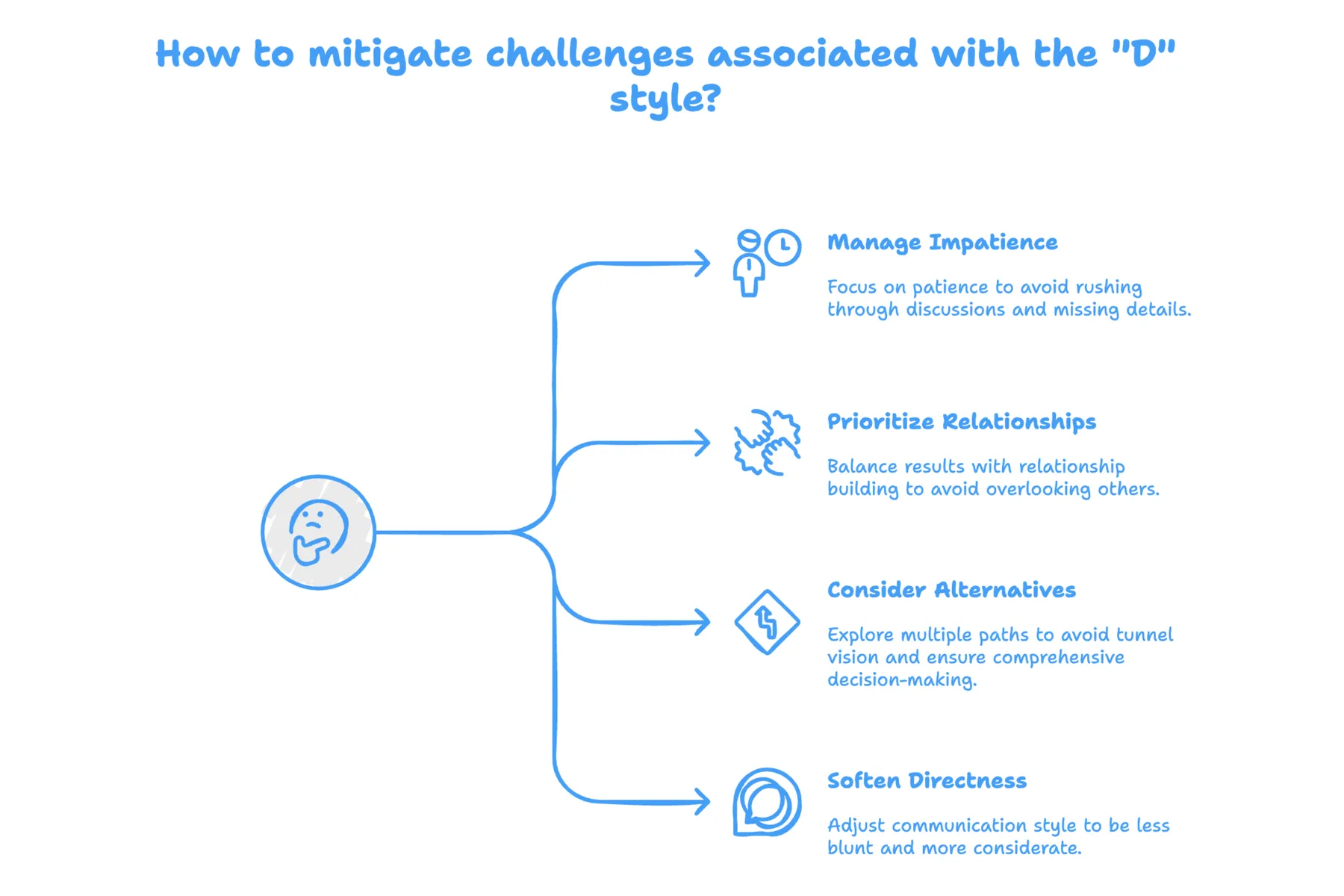
The goal is not to diminish these traits, but to balance them. A “D” who pauses to listen, considers details, and adapts their pace when needed becomes far more effective.
Leading and Working With “D”
For leaders who are high in “D”:
- Recognize when speed sacrifices clarity.
- Slow down long enough to hear input from other styles.
- Pair decisiveness with patience to build alignment.
For those working with a “D”:
- Be direct and get to the point.
- Focus on results and outcomes rather than long explanations.
- Respect their time since they value efficiency.
Dominance is the energy that drives progress. People high in “D” bring urgency, confidence, and a willingness to make tough calls when others hesitate. But true leadership is not only about pushing forward. It is about knowing when to slow down, bring others along, and use input to strengthen decisions.
For teams, having a strong “D” presence creates momentum, but balance is essential. A decisive leader paired with steady collaborators, detail-oriented analysts, and enthusiastic influencers creates the kind of team that does not just move fast. It moves smart.
Here’s the Point 🔵 The power of “D” is its drive to act, and its true effectiveness comes when that drive is balanced with awareness, collaboration, and respect for others.